


Solar LED street lights for Philippines coastal walkways must handle more than ordinary night lighting. Buyers for resorts, barangays, coastal roads, public paths, parking entries, and waterfront access areas need systems that can support reliable illumination while facing humidity, rain, wind, salt air, and seasonal storm exposure.
Official Philippine weather guidance from PAGASA explains that tropical cyclones are a recurring concern for the country, while public infrastructure updates from DPWH show continued road and access improvements across local communities. For B2B buyers, this makes specification discipline important: the solar street light should be selected as a complete outdoor system, not only as a lamp head.
Coastal sites often include open wind exposure, humid air, salt spray, wet surfaces, and pedestrian movement after dark. A practical solar LED street light specification should consider pole height, road or path width, panel orientation, battery autonomy, waterproof housing, corrosion-resistant brackets, and maintenance access.
Energy-efficient lighting guidance from the U.S. Department of Energy and outdoor lighting principles from DarkSky also support two useful procurement rules: choose efficient light sources and control where the light goes. Good solar lighting should improve visibility without excessive glare or unnecessary spill light into nearby homes, beaches, or resort areas.
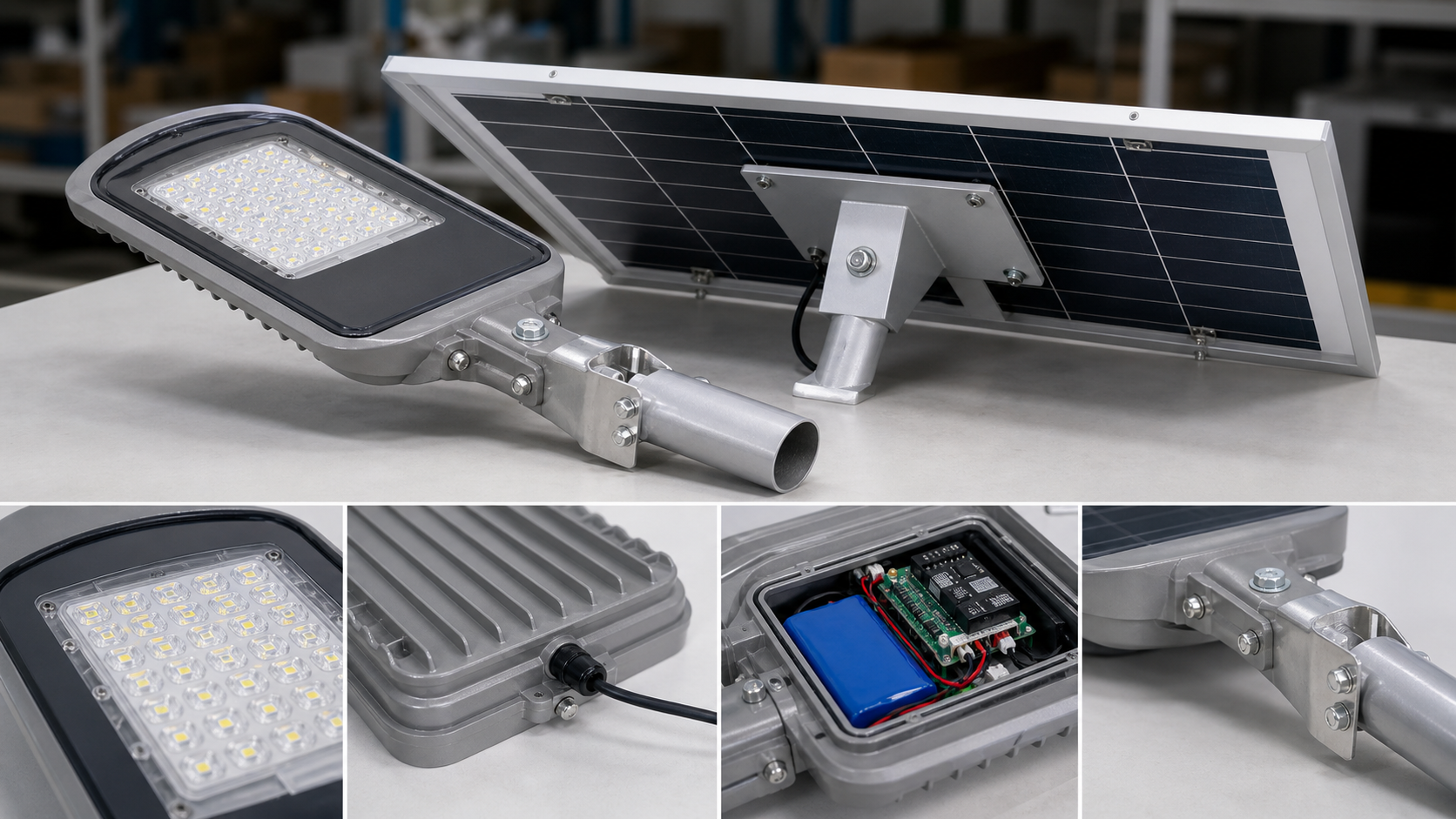
Ask how many cloudy or rainy days the system is designed to support. Battery capacity, controller settings, dimming schedule, and LED load should match the real nightly operating hours instead of a generic catalog claim.
For coastal and tropical projects, IP65 is a practical baseline, but buyers should also review gasket quality, cable entry, solar panel frame, bracket material, fasteners, controller protection, and battery compartment sealing.
Solar charging depends on actual sunlight. Check for shade from palm trees, buildings, signs, mountains, utility poles, or nearby structures before confirming the mounting location.
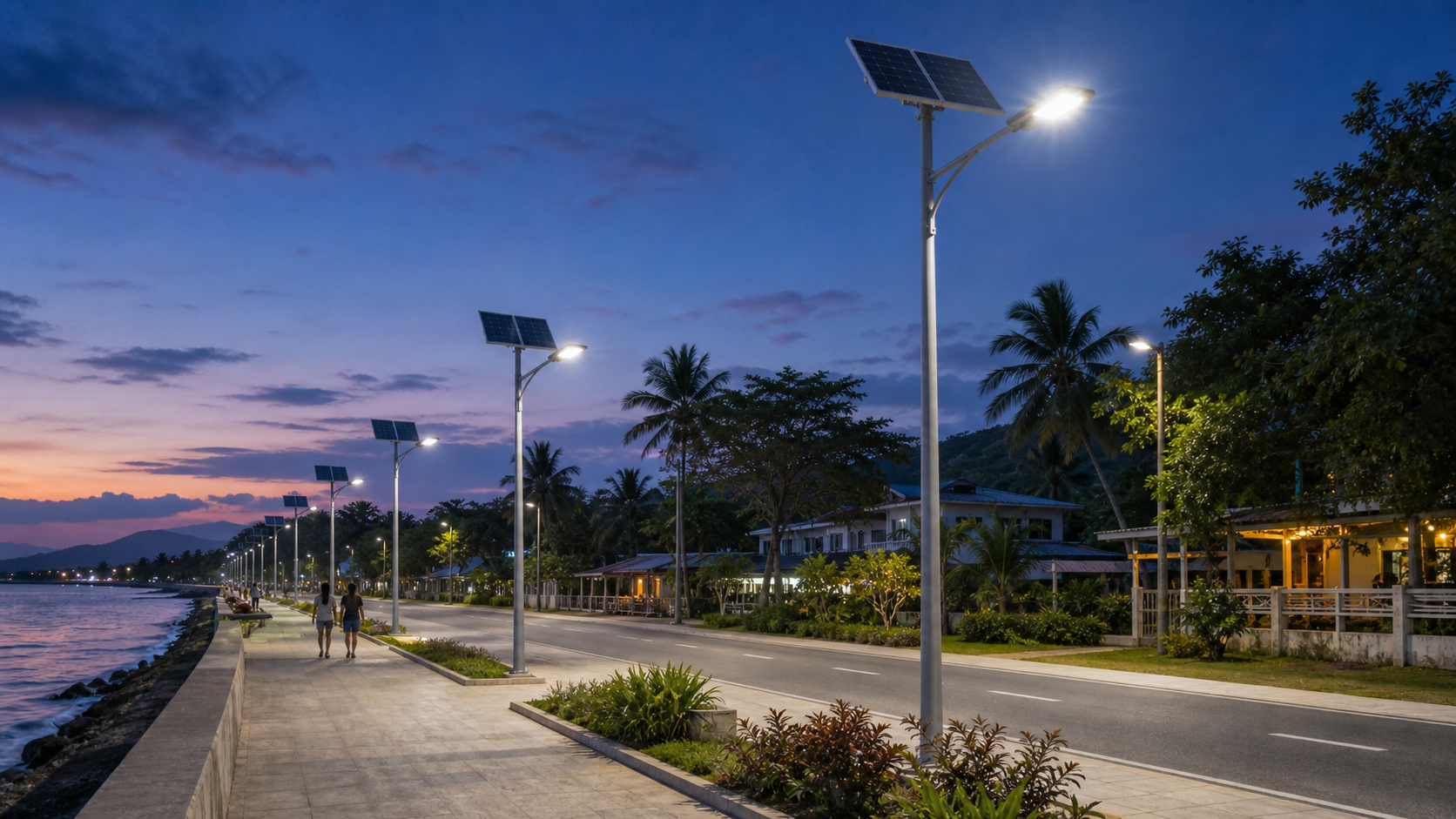
Walkways, resort paths, barangay roads, and public access lanes need comfortable visibility. Select optics and mounting height that light the path surface without shining directly into pedestrians' eyes or nearby rooms.
Before requesting a quotation, prepare the project city or island area, site type, path or road width, pole height, pole spacing, expected operating hours, rainy-day autonomy target, wind exposure, corrosion requirement, packing requirement, quantity, and target delivery schedule.
Ask the supplier for product photos, datasheets, installation instructions, carton marks, spare parts, battery information, controller settings, and model consistency for repeat orders. Factory direct support is useful when buyers need the same solar lighting model across multiple coastal communities or resort phases.
The first mistake is choosing only by wattage. A solar LED street light is a balance of LED power, solar panel size, battery capacity, controller program, optics, and local sunshine conditions.
The second mistake is ignoring corrosion. Coastal brackets, fasteners, cable entries, and housing materials should be reviewed carefully because the environment can be harsher than inland roads.
The third mistake is assuming every site receives full sun. Even a good solar light can underperform if trees, roofs, or terrain shade the panel during key charging hours.
Common applications include coastal roads, resort paths, barangay walkways, public access lanes, parking entrances, waterfront promenades, and small municipal roads.
IP65 is a useful baseline, but buyers should also check sealing, bracket material, fasteners, cable entry, battery protection, and installation quality.
Compare LED wattage, panel size, battery capacity, autonomy design, controller program, housing material, optics, pole recommendation, warranty, packing, and spare-part support.
They can be designed for rainy-season use, but performance depends on panel sizing, battery capacity, local sunlight, dimming schedule, and actual nightly operating hours.
Factory direct communication helps importers and contractors keep model selection, packing, documentation, spare parts, and repeat-order specifications consistent.
Solar LED street lights for Philippines coastal walkways should be specified as outdoor lighting systems for real site conditions. Buyers need balanced solar charging, battery autonomy, IP65 construction, corrosion-aware mounting, controlled optics, and reliable supplier support.
If you are sourcing solar LED street lights for coastal roads, barangay paths, resort walkways, public access areas, or waterfront projects in the Philippines and Southeast Asia, contact Guangzhou Vantone Science & Technology Co., Ltd. for factory direct model selection and B2B quotation support.
